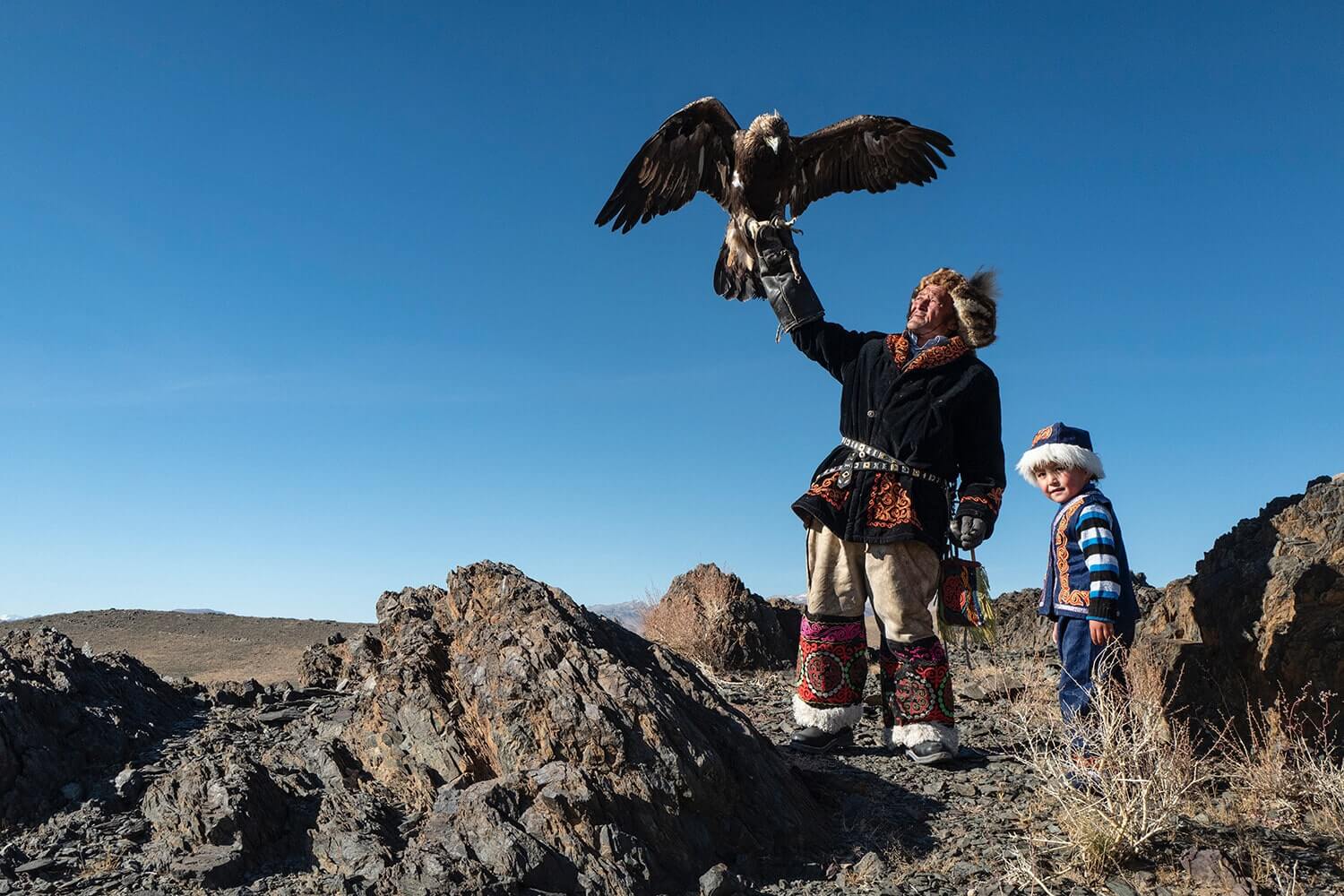
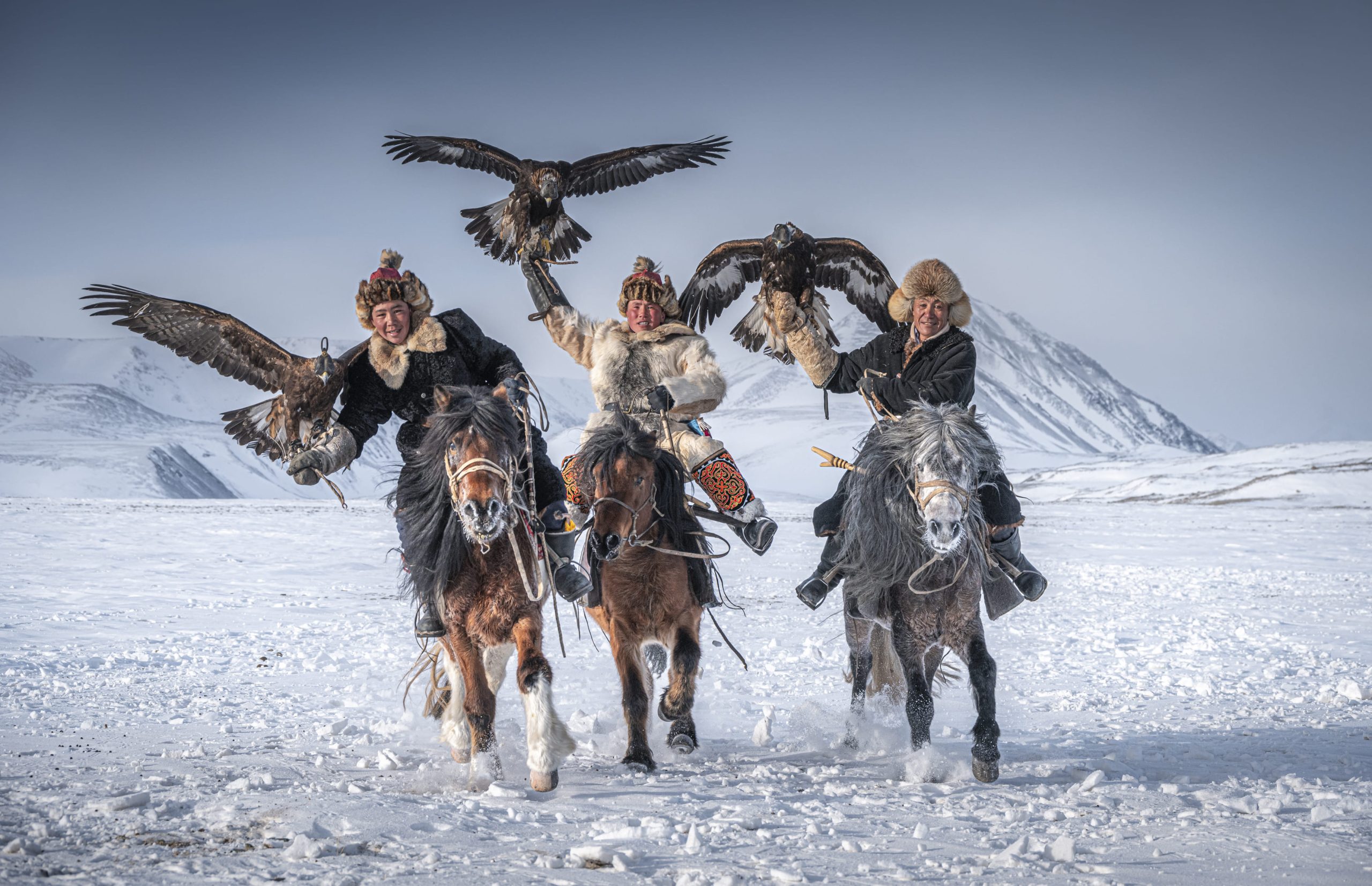
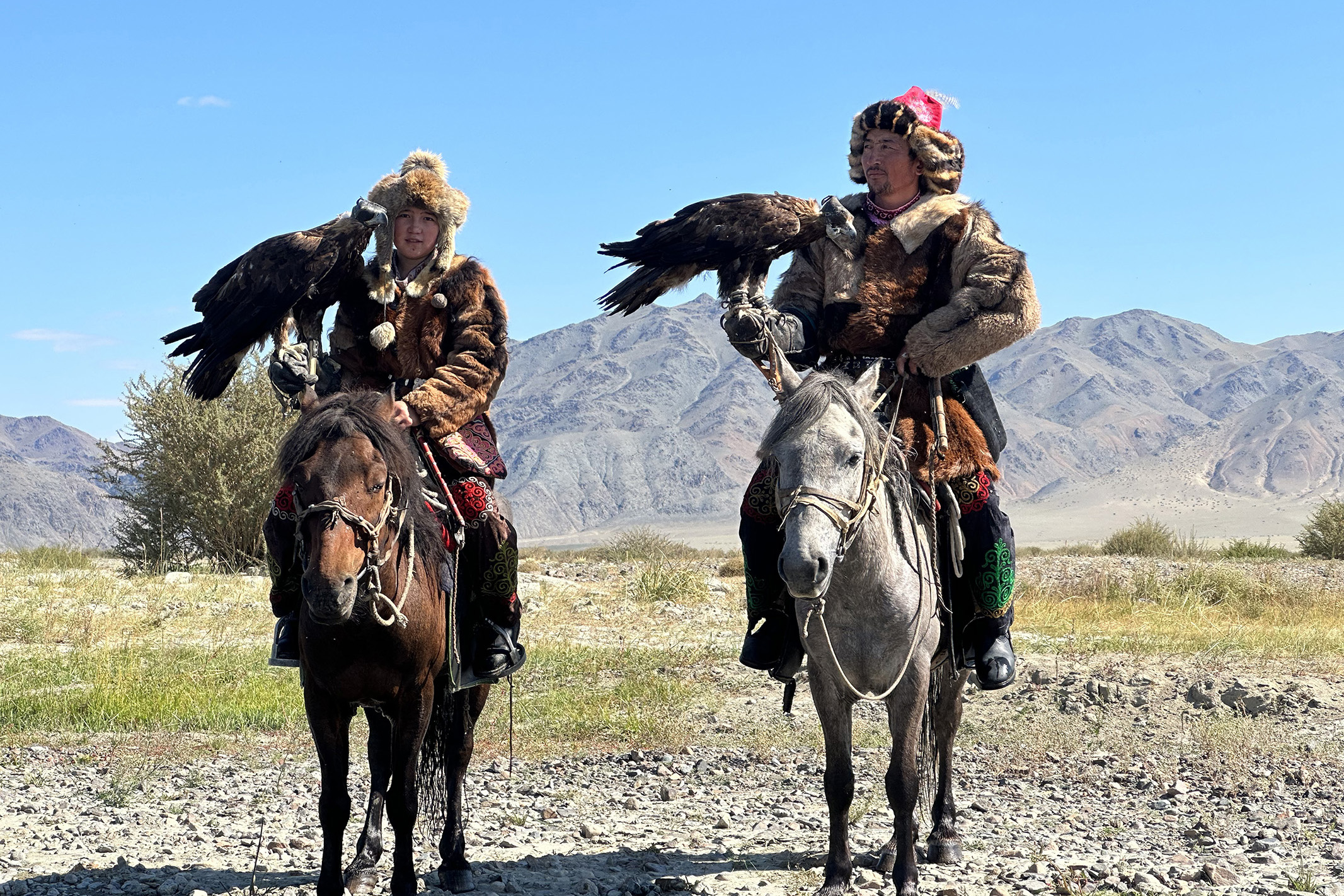
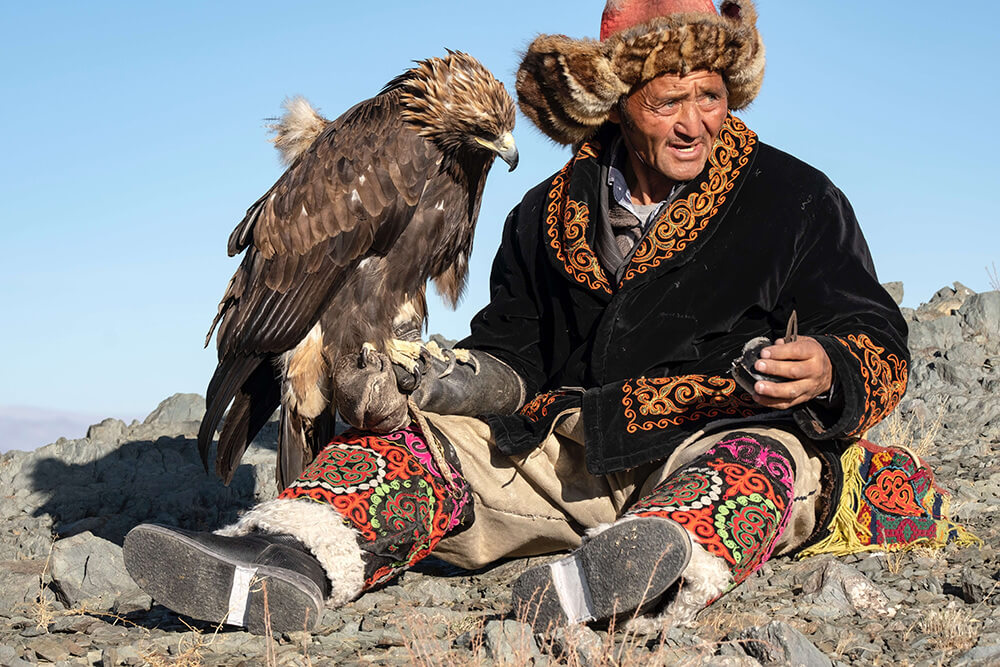
Eagle hunters of Mongolia are among the most iconic and fascinating symbols of the country’s nomadic heritage. Practiced for more than a thousand years, the ancient tradition of eagle hunting is most famously preserved by the Kazakh people of western Mongolia, particularly in the Altai Mountains. This remarkable cultural practice reflects a deep bond between humans, animals, and nature, passed down through generations with great pride and respect.
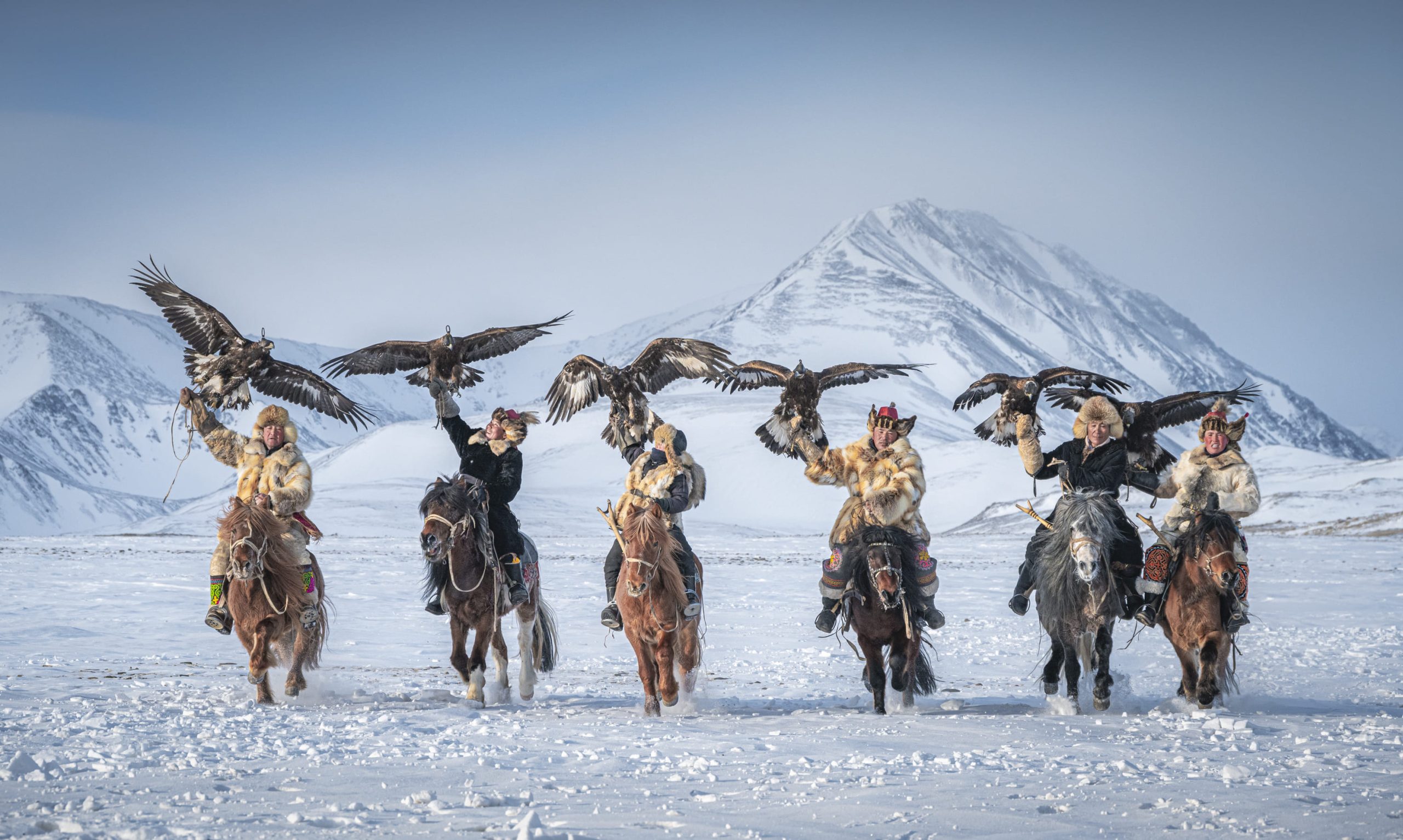
Eagle hunters train female golden eagles, chosen for their strength, intelligence, and hunting ability. From a young age, the eagles are carefully raised and trained to hunt foxes and small game during the winter months, when thick fur is most valuable. The relationship between hunter and eagle is built on trust, patience, and daily care. Hunters often say that the eagle is not a tool, but a partner, responding to voice commands and subtle movements with astonishing precision.
Dressed in traditional fur-lined coats and riding sturdy horses across snow-covered mountains, eagle hunters present a powerful and unforgettable image. Their skills require exceptional horsemanship, endurance, and knowledge of the land. Hunting trips can last for days, with hunters navigating harsh weather and rugged terrain in search of prey. Despite modern changes, many families continue this practice not only for survival, but to preserve their cultural identity.
Visitors to Mongolia can experience this tradition firsthand by traveling to the Altai region or attending eagle hunting festivals, where hunters demonstrate their skills and celebrate their heritage through music, costume, and competition. These events provide insight into a way of life that remains deeply connected to nature.
The eagle hunters of Mongolia represent resilience, tradition, and harmony with the environment. Their continued practice ensures that this extraordinary cultural legacy remains alive, offering the world a rare glimpse into one of humanity’s most enduring and respectful relationships with wildlife.
ACCOMMODATION:YesDURATION::16 days, 15 nightsTOUR DISTANCE:4000kmGroup size:1-20TOUR OPERATOR:Idre tour
Ulaanbaatar - Khustai Nuruu National Park - Elsen Tasarkhai - Kharkhorin City & Erdenezuu Monastery - Great White Lake - Oigon Lake - Khyrgas Lake - Achit Lake - Ulgii Province - Eagle Hunter Family - Ulgii Province - Golden Eagle Festival - Khovd Province - Delgerekh Village - Uvurkhangai Province - Ulaanbaatar City Tour
Activities
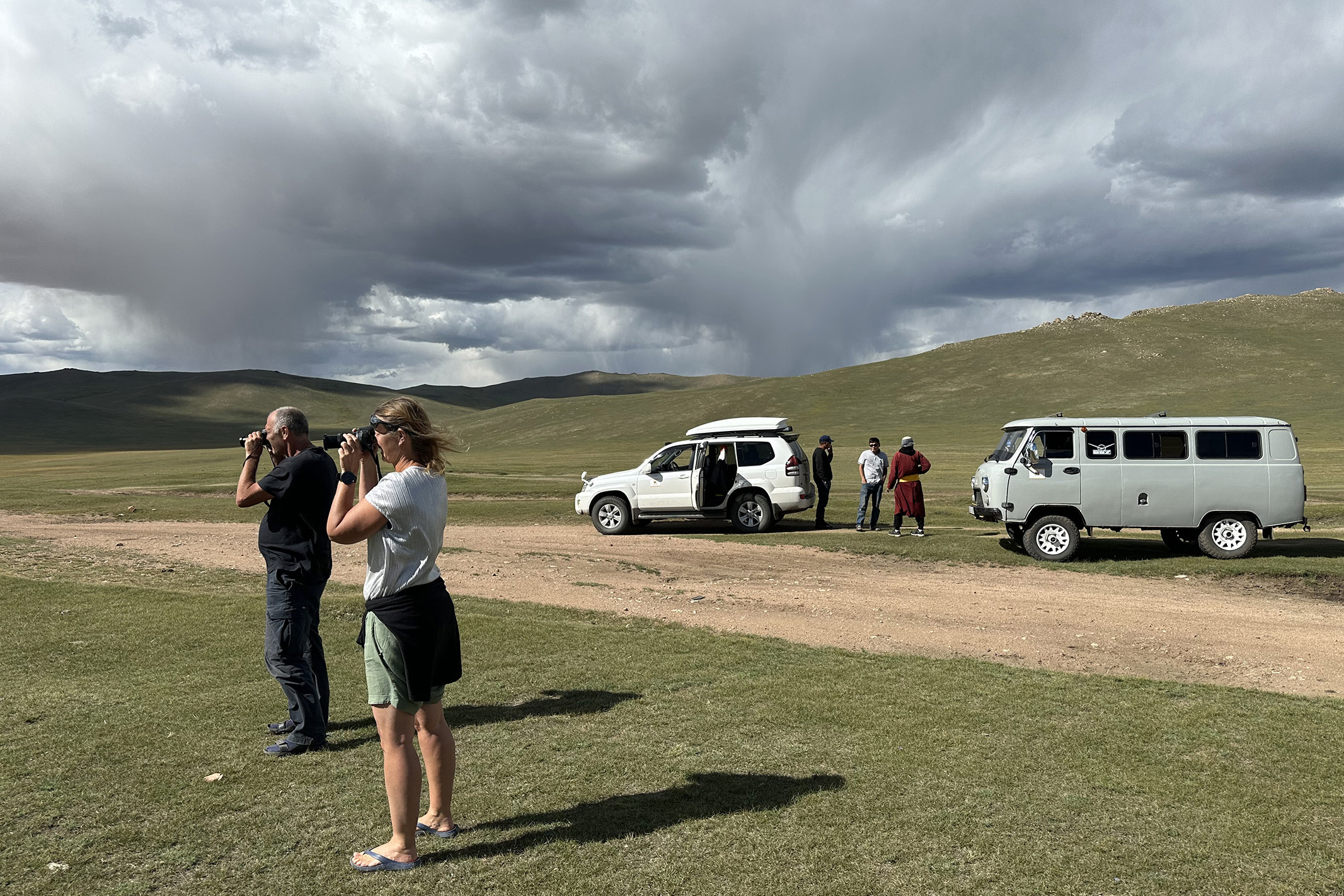
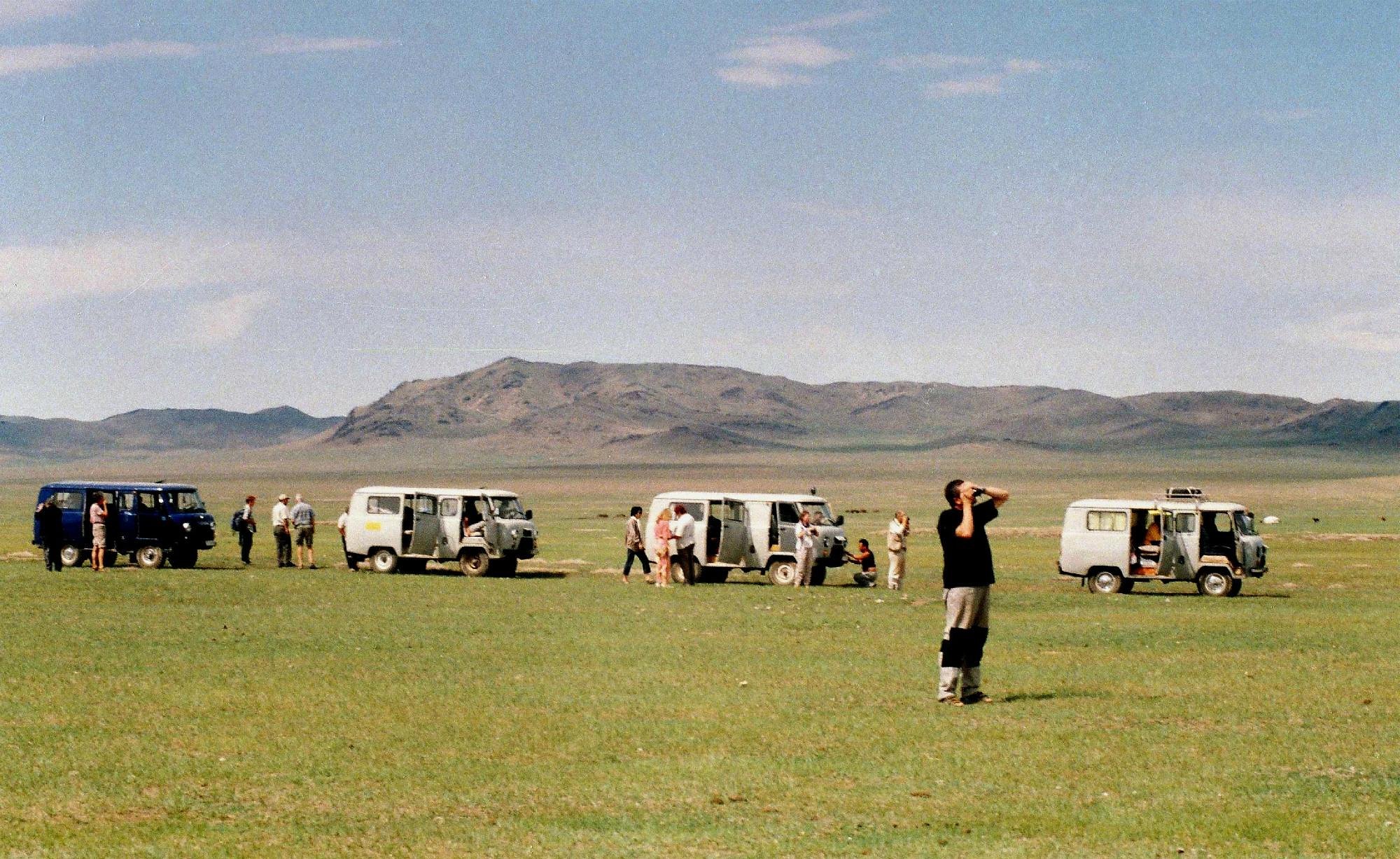
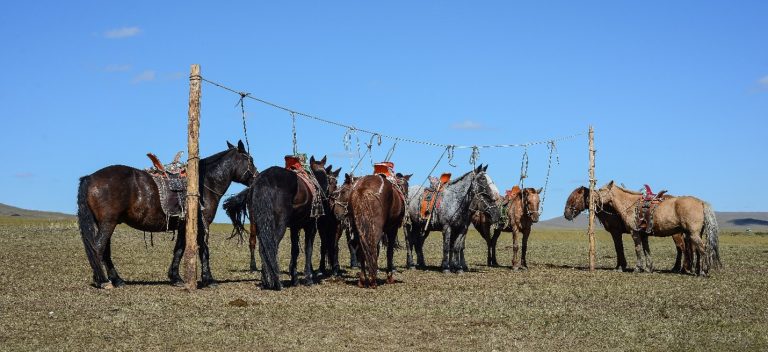
On this tour, you will have the chance to experience the local family lifestyle, go hiking, enjoy camel and horseback riding, visit temples and museums, catch a glimpse of wild horses, and explore the ancient Mongolian capital and its museum. We’ll also see many beautiful lakes in Western Mongolia, visit the Kazakh people who are renowned for their eagle-hunting tradition, climb high mountains, and experience the Golden Eagle Festival.
Day 1
Khustai Nuruu National park & Elsen Tasarkhai
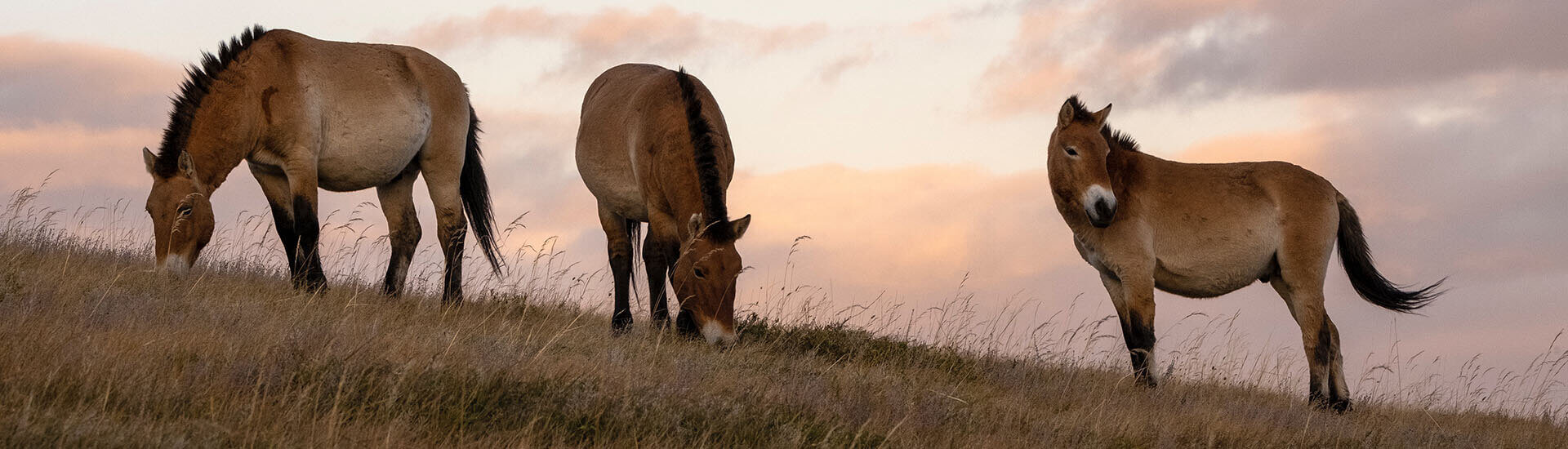
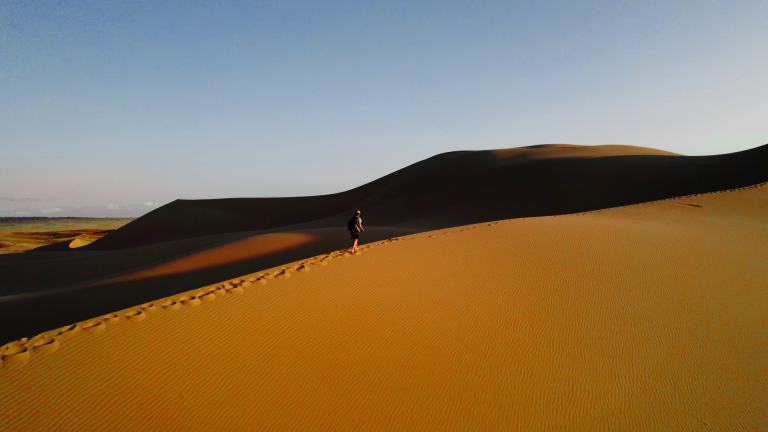
We’ll drive to Khustai National Park, located on the northern side of the Tuul River, about a two-hour drive west of Ulaanbaatar. Although it is located in the central grasslands, “Khustai” means “with birch,” as birch trees and aspen groves are plentiful in the area. It is a hilly terrain, with the Tuul River forming the southern boundary. The national park was originally established in 1993 as a nature reserve for the first reintroduction of the Przewalski’s horse (Equus przewalskii) into Mongolia. Today, the Khustai Trust runs the park, funded mainly through tourism. After lunch, we’ll drive to Mount Khogno Khan Nature Reserve. The mountain is home to hundreds of birds, as well as deer and gazelles. You’ll be able to ride a camel and go hiking around the area or visit the nearby small sand dunes called Elsen Tasarkhai.
Day 2
Kharkhorin & Great White Lake
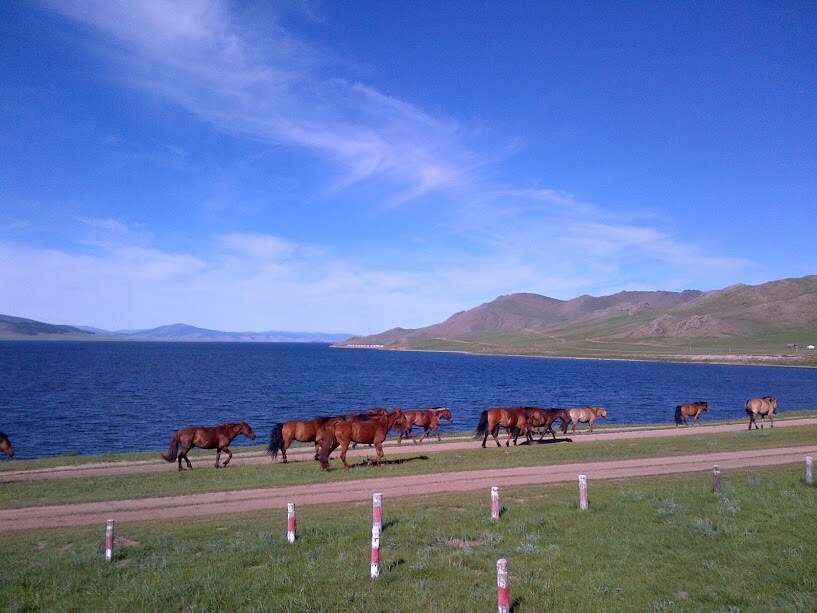
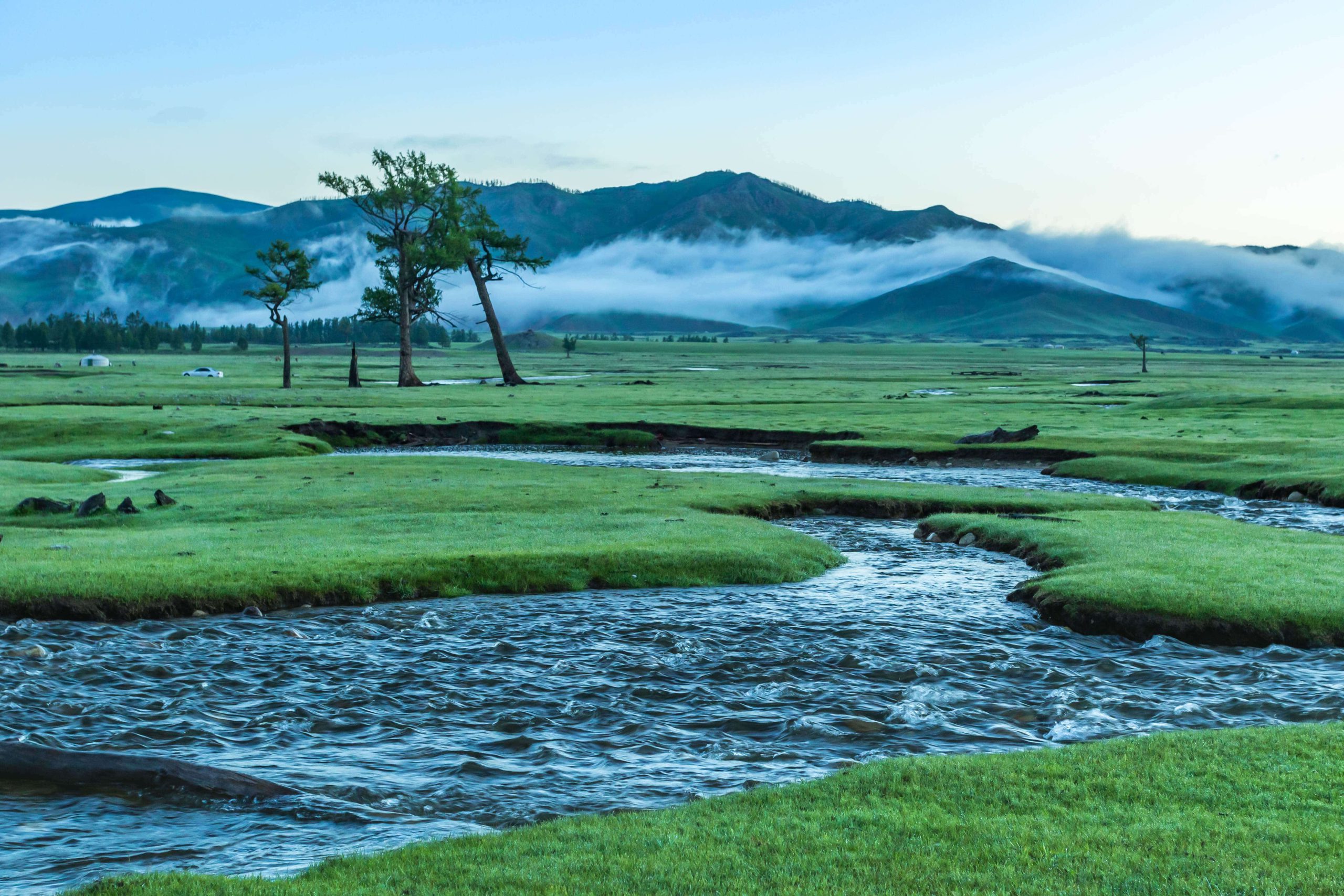
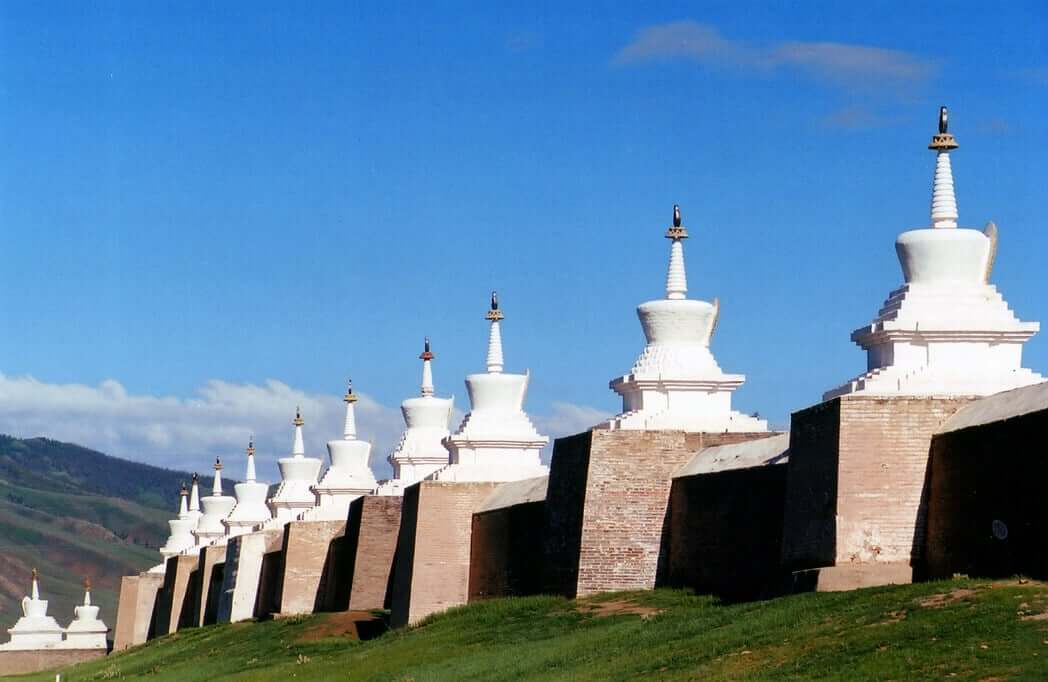
We’ll drive to Kharkhorin, the ancient capital of Mongolia and Chinggis Khaan’s fabled city, founded in 1220 in the Orkhon Valley at the crossroads of the Silk Road. It was from here that the Mongol Empire was governed until Kublai Khan moved the capital to Beijing. Kharkhorin served as the capital for about 40 years. Following the move and the subsequent decline of the Mongol Empire, Karakorum was abandoned. Much of what remained was later used to build the magnificent Erdene Zuu Monastery in the 16th century. Nearby are Turkic monuments and rock inscriptions erected in the 8th–9th centuries in memory of outstanding fighters for independence. After lunch, we’ll drive to Terkhiin Tsagaan Lake (Great White Lake) and Khorgo Volcano. Khorgo-Terkhiin Tsagaan Nuur National Park was established to protect the spectacular mountain scenery and endangered species of flora and fauna. The area features extinct volcanoes, beautiful lakes, and a great variety of animals and birds, making it one of Mongolia’s best natural attractions. Khorgo Volcano is a unique natural formation located at an altitude of around 2,240 meters and surrounded by the Khangai Mountains, which rise to around 3,000 meters above sea level. Some of the volcanic craters contain tiny, crystal-clear lakes. The Khorgo crater, situated at an altitude of approximately 2,210 meters, is around 20 meters in diameter and 70–80 meters deep, making it one of the most impressive features of the area.
Day 3
Oigon Lake
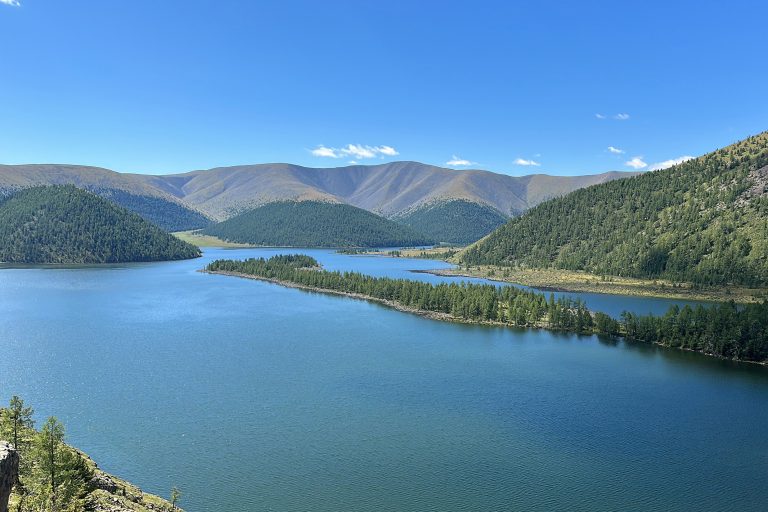
Oigon Lake is located in Zavkhan Province, Mongolia, at an elevation of approximately 1,666 meters above sea level. We’ll camp by the lake and enjoy the beautiful surrounding landscape.
Day 4
Khyrgas Lake
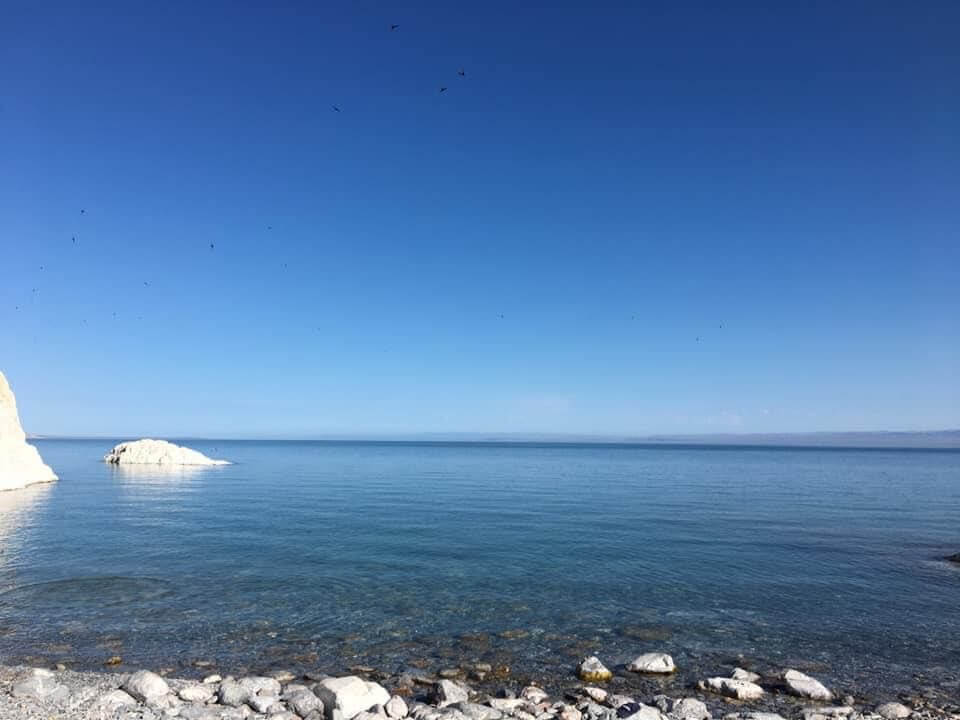
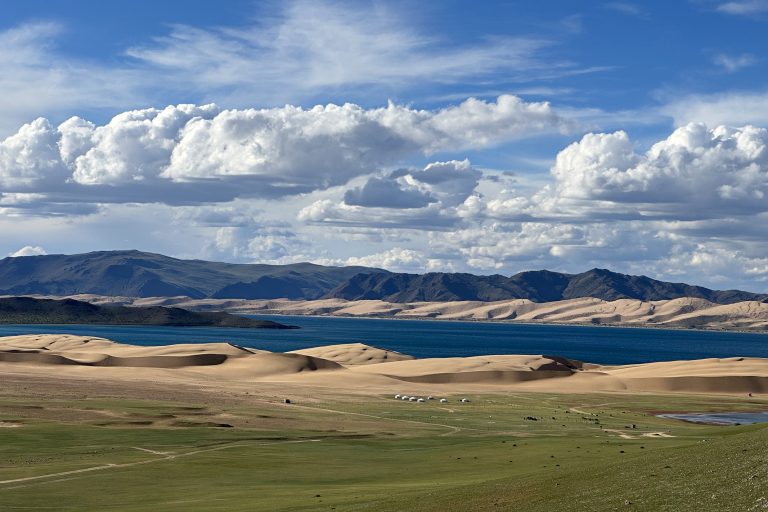
We’ll drive west toward Khyargas Lake, passing through a diverse landscape of lakes, wetlands, sand dunes, and high mountains. We’ll arrive at Khyargas Lake, the second-largest saltwater lake in Mongolia. The lake is rich in fish and is also a great place for birdwatching.
Day 5
Bayan-Ulgii Province
We’ll drive to Bayan-Ulgii Province, the westernmost province of Mongolia. Unlike other provinces, its population is predominantly made up of Turkic Kazakhs, who have their own language, customs, and Muslim traditions. On the way, we’ll visit a Kazakh family living in slightly larger and more colorful gers. They traditionally train eagles, falcons, and hawks for hunting marmots, small foxes, and wolves. We’ll then continue to Bayan-Ulgii and stay overnight in a hotel.
Day 6
Kazakh Family (Eagle Hunters)
We’ll drive to a Kazakh eagle hunter family. We’ll experience their authentic traditional lifestyle and enjoy their warm hospitality. The eagle hunters will demonstrate their training techniques and introduce us to the ancient tradition of eagle hunting. You’ll also have the opportunity to talk with the hunters and learn more about how they train, care for, and hunt with their eagles.
Day 7
Kazakh Family (Eagle Hunters)
We will spend a second day with the eagle hunters, exploring their traditional lifestyle and culture.
Day 8
Altai Tavan Bogd Mountain
We are entering the high mountain area of the Altai Mountains, traveling at an altitude of around 2,500–3,000 meters. Today, we will prepare for the trekking.
Day 9
Altai Tavan Bogd Mountain
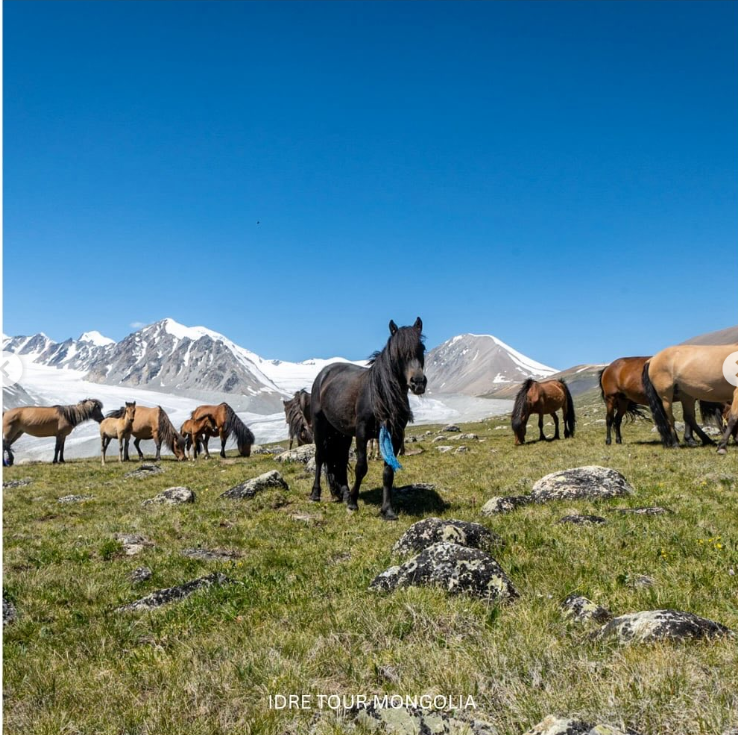
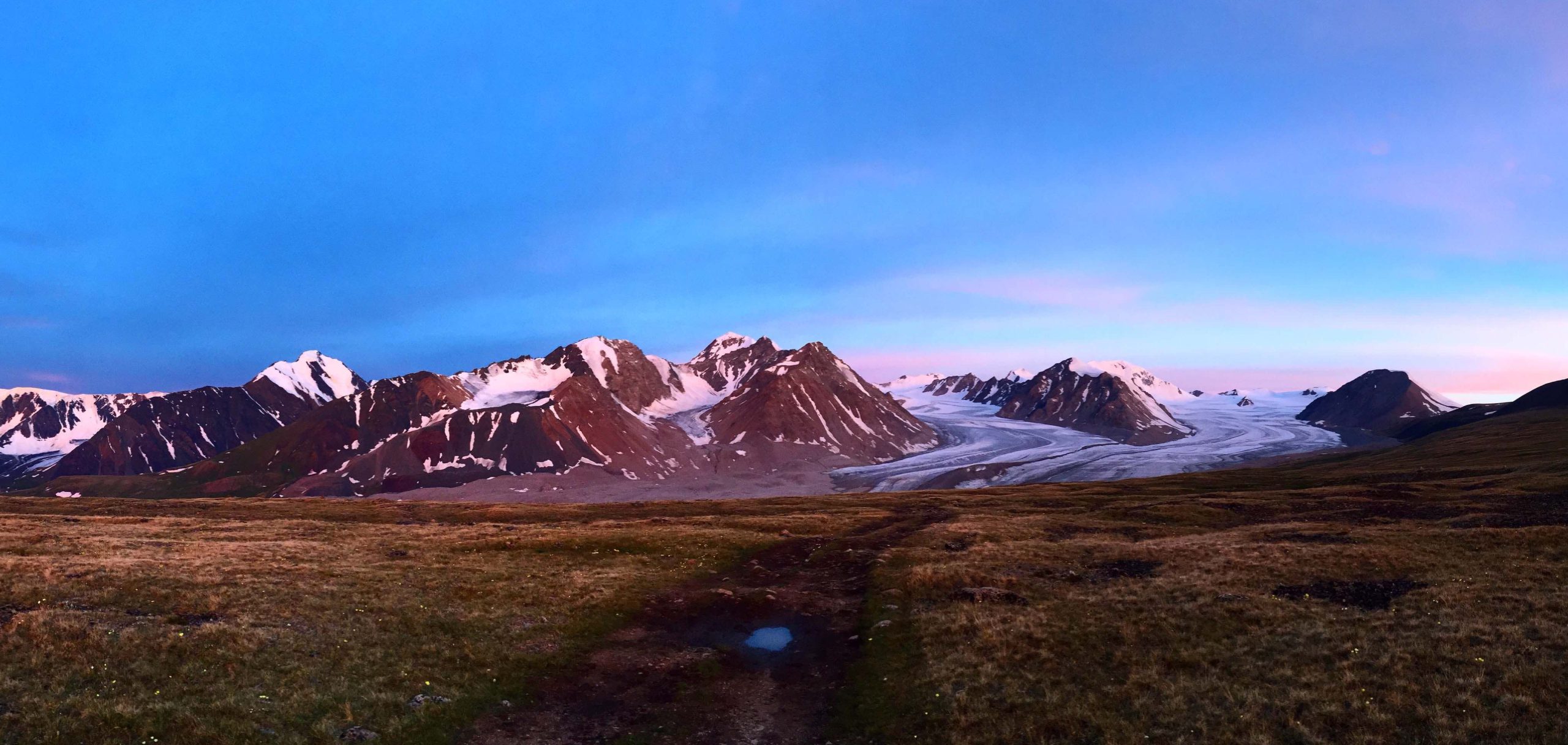
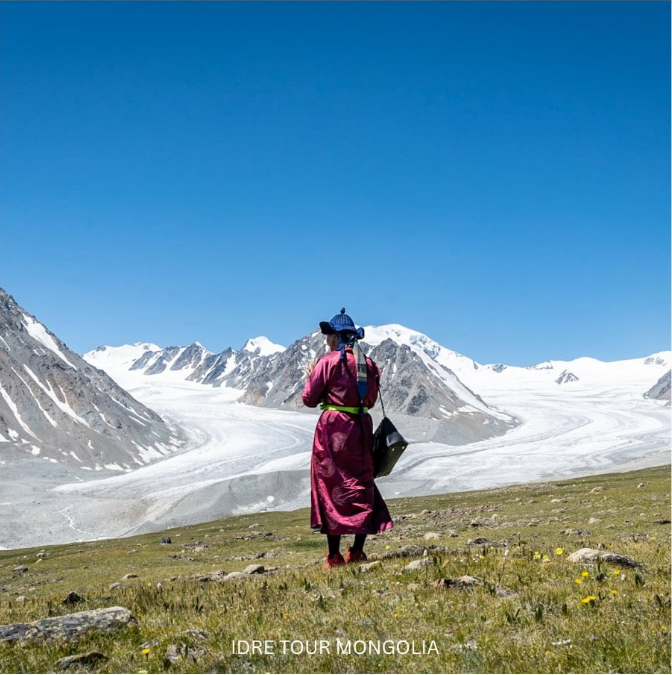
We’ll start our trekking towards Potanin Glacier and Tavan Bogd, which means “Holy Five Peaks.” Tavan Bogd consists of five neighboring peaks: Khuiten Uul (4,374 m), Malchin Peak, Naran Peak, Burged Peak, and Ulgii Peak. While trekking, we’ll cross glaciers and enjoy the spectacular mountain scenery surrounding these five peaks.
Day 10
Bayan-Ulgii province
We’ll drive to Bayan-Ulgii province. Bayan-Ulgii is the biggest town in Western Mongolia. Unlike other provinces its population is dominated by Turkic Kazakhs, which have their own language, customs and Muslim religion. On the way visit Kazakh family, living in slightly larger and colorful gers. They train eagles, falcons, hawks to collect marmots, small foxes and wolves and return to the ger, where the Kazakhs use them for food. We’ll stay in a hotel.
Day 11
Golden Eagle festival
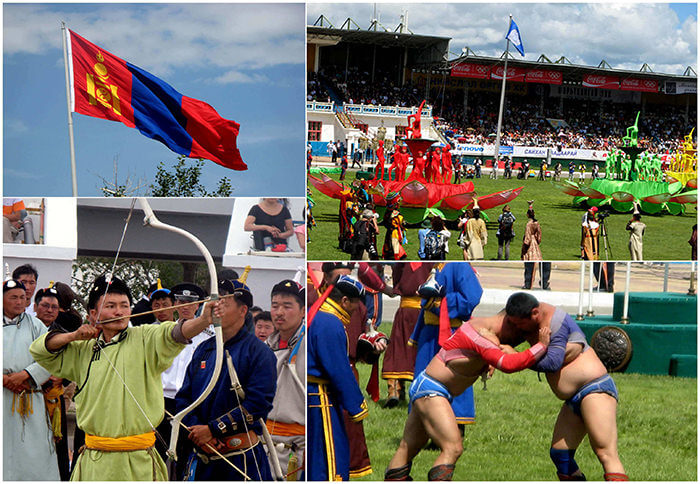
The Golden Eagle Festival or Eagle Festival is an annual traditional festival held in Bayan-Ulgii aimag, Mongolia. In the eagle festival, Kazakh eagle hunters celebrate their heritage and compete to catch small animals such as foxes and hares with specially trained golden eagles, showing off the skills of both the birds and their trainers. Prizes are awarded for speed, agility and accuracy, as well as for the best traditional Kazakh dress, and more.
Day 12
Golden Eagle festival
We will experience the second day of the Golden Eagle Festival.
Day 13
Gobi-Altai Province
We’ll start heading back to Ulaanbaatar. It will be a full day of driving, and we’ll stay overnight in Gobi-Altai Province.
Day 14
Uvurkhangai Province
It will also be a full day of driving. We’ll stay overnight in Uvurkhangai Province.
Day 15
Ulaanbaatar
Today, we will arrive in Ulaanbaatar around 6–7 PM. Then, we’ll drop you off at your accommodation.
Day 16
Ulaanbaatar City Tour
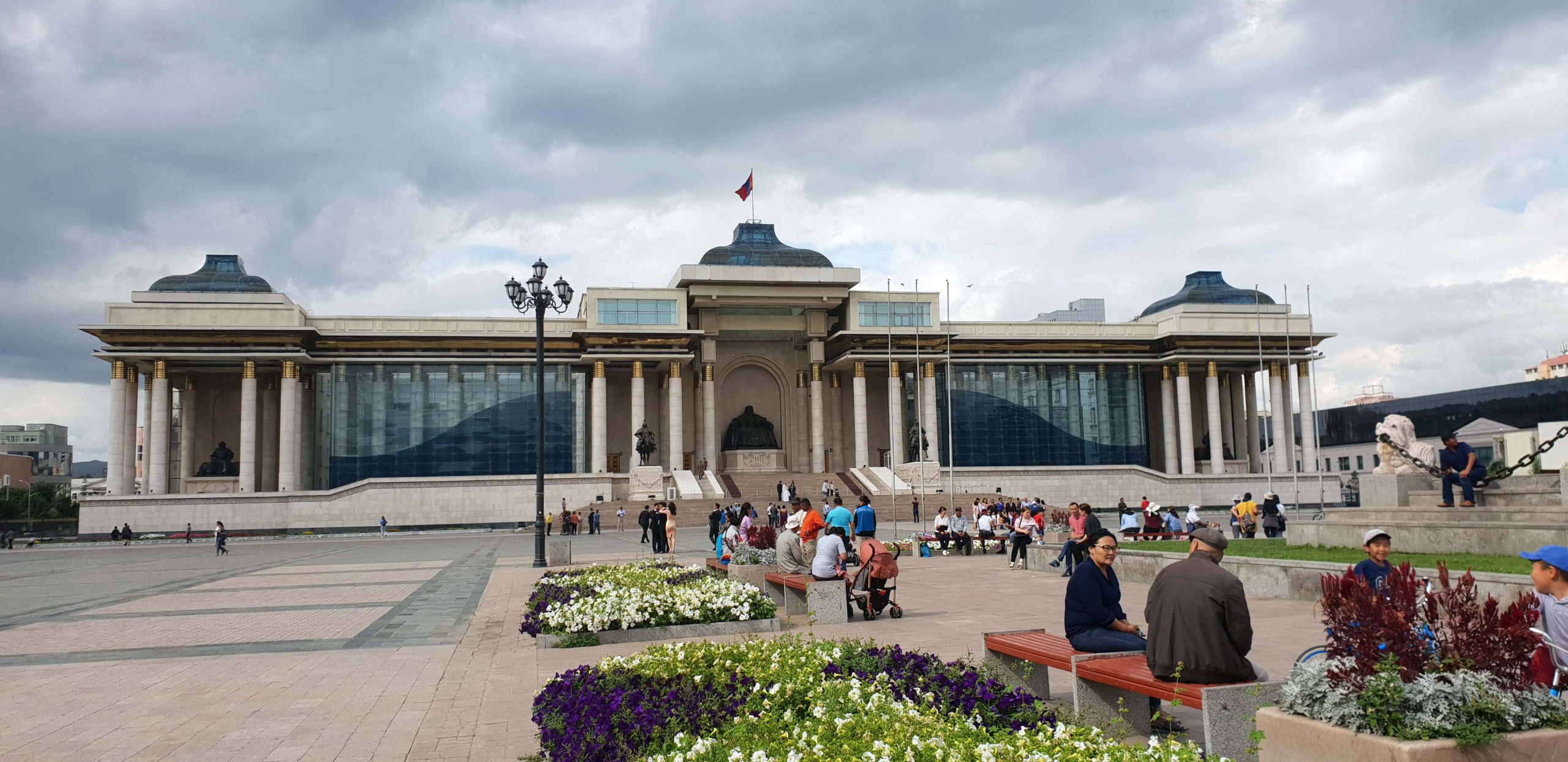
Today, we will explore Ulaanbaatar on a city tour. We’ll begin with Gandan Monastery, then continue to the Chinggis Khaan National Museum, where you can learn about Mongolia’s history from ancient times to the present day. After lunch, we’ll visit the Bogd Khan Museum and watch a traditional performance by the Tumen Ekh Ensemble. After that, we’ll enjoy a farewell dinner and drop you off at your hotel.
Tour Price
ALL PRICE ARE PER PERSON PER DAY
The difference between a comfortable tour and budget tour relates primarily to the accommodation type. Within a budget tour all accommodation will be with a nomadic family in their Ger. While a comfortable tour includes accommodation at Ger camps which are similar to a 3-4 star hotel standard. Finally the Mid-Range tour mixes Comfortable and Budget, where you will stay some nights in the traditional Ger with a nomadic family and others in a Ger camp.